
Details
ISBN/EAN: 978-3-525-55773-0
Einband: gebundenes Buch
Weitere Details
Auflage:
1. Auflage 2014
1. Auflage 2014
Erschienen am:
22.01.2014
22.01.2014
Sprache:
Deutsch
Deutsch
Umfang:
379 S., 24 Illustr., 24 Fotos, 24 Abb., 10 Graphik
379 S., 24 Illustr., 24 Fotos, 24 Abb., 10 Graphik
Format (T/L/B):
3 x 24 x 16.5 cm
3 x 24 x 16.5 cm
Hersteller:
Vandenhoeck & Ruprecht
ute.schnueckel@brill.com
Theaterstraße 13
DE 37073 Göttingen
Vandenhoeck & Ruprecht
ute.schnueckel@brill.com
Theaterstraße 13
DE 37073 Göttingen
Weitere Details
arrow_forward_ios
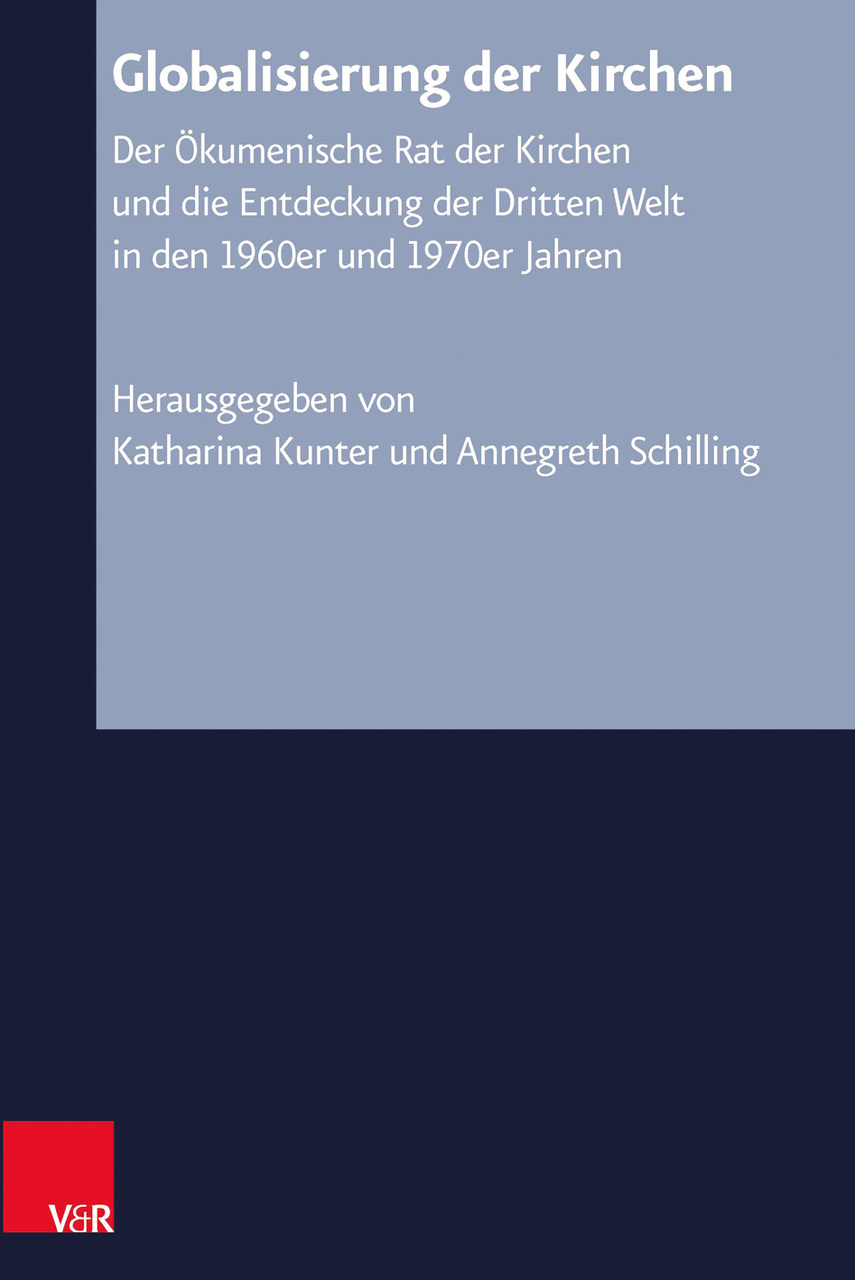
Globalisierung der Kirchen
Der Ökumenische Rat der Kirchen und die Entdeckung der Dritten Welt in den 1960er und 1970er Jahren, Arbeiten zur Kirchlichen Zeitgeschichte. Reihe B: Darstellungen Band 058, Arbeiten zur Kirchlichen Zeitgeschichte 58, Reihe B: Darstellungen
120,00 €
inkl. MwSt.
Lieferbar innerhalb 1 - 2 Wochen
Beschreibung
The churches are among the most important global actors, operating locally while also belonging to a larger transnational network. This can be seen in the World Council of Churches (WCC), the most important international representative of non-Roman Catholic Christianity, which first developed into a truly global non-governmental organization during the 1960s and 1970s. While the founding of the WCC in 1948 was above all the work of European and North American churches, representatives of the Third World took greater control of the organization in the wake of the decolonization, de-Westernization, and revolutionary upheavals of the early 1960s.The positive effects of this more comprehensive globalization can be seen in the growing presence of representatives from Africa, Asia, and Latin America in the WCC. However, as this volume demonstrates in contributions from scholars in the fields of global history and theology, the process of globalization also led to new theological and cultural conflicts that threatened to destabilize the ecumenical movement. New areas of international church cooperation included engagement with development questions, a commitment to human rights and the liberation of the oppressed, and the struggle against racism. In one of its most important contributions, this volume shows how the globalization of the churches gradually brought an end to the exclusively Western profile of the WCC and worldwide Protestantism.
Schlagzeile
Unter dem wachsenden Einfluss der Dritten Welt und der damit einhergehenden Globalisierung vollzog sich in den 1960er Jahren ein epochaler politischer, kultureller und theologischer Umbruch im weltweiten Protestantismus und in der Ökumene.